chome mung
Nghệ An, Vietnam · with threads from Hanoi, and from the Hmong and Dao communities
Silk, cotton, and the roads that carried them together.
Chôm mâng began without a plan. Cat-Vi did not travel to Vietnam to build a collection. She went to sit with her grandmother, to find her way back into the language, and to touch a part of herself she had not yet met. This collection is what grew alongside that, in a village of silk weavers in Nghệ An, and in the stock rooms and shops of Hanoi. It is not woven from one community's hands alone, and that, too, is part of its story.
 Hoa Tiến · Nghệ An
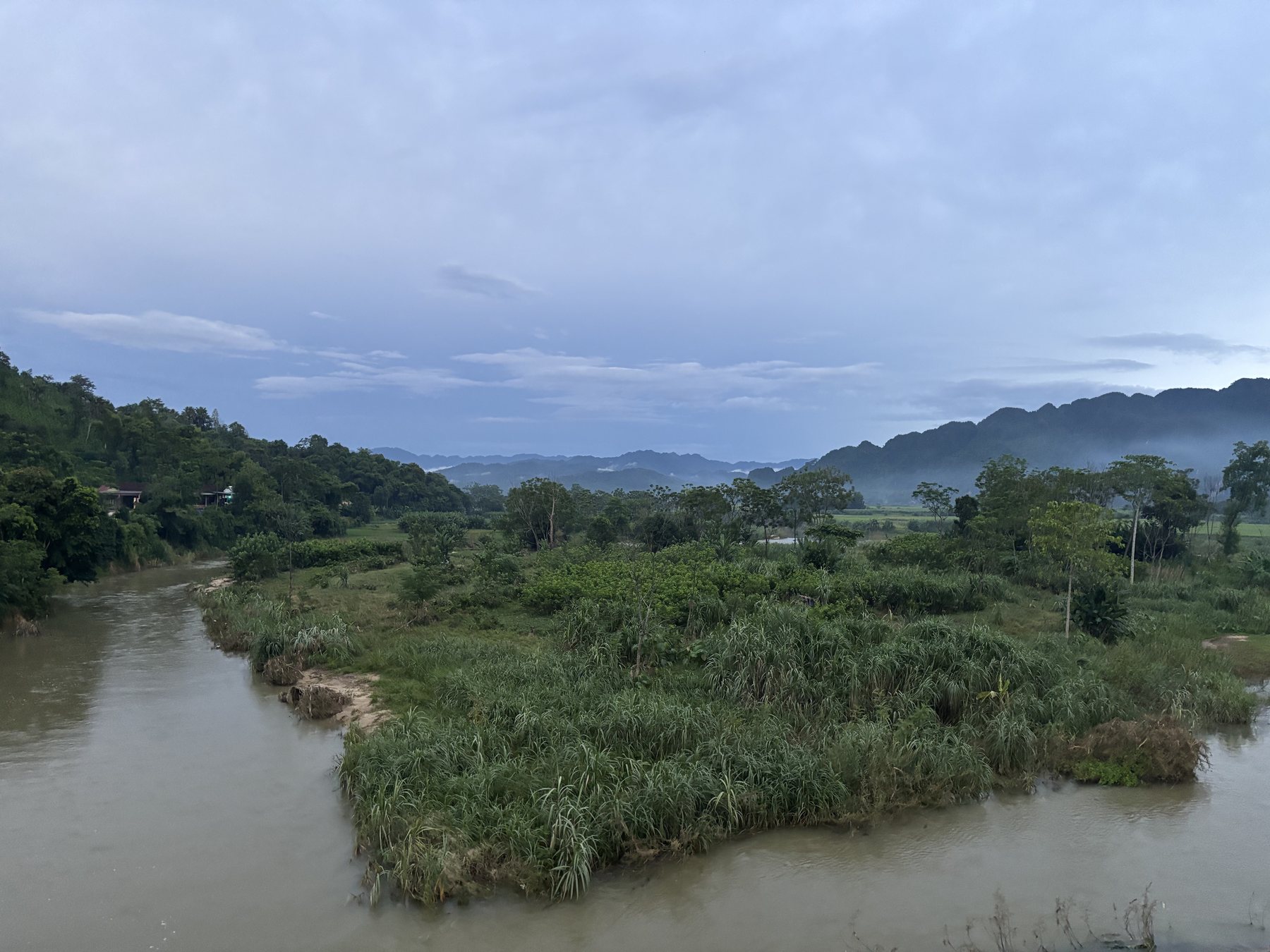
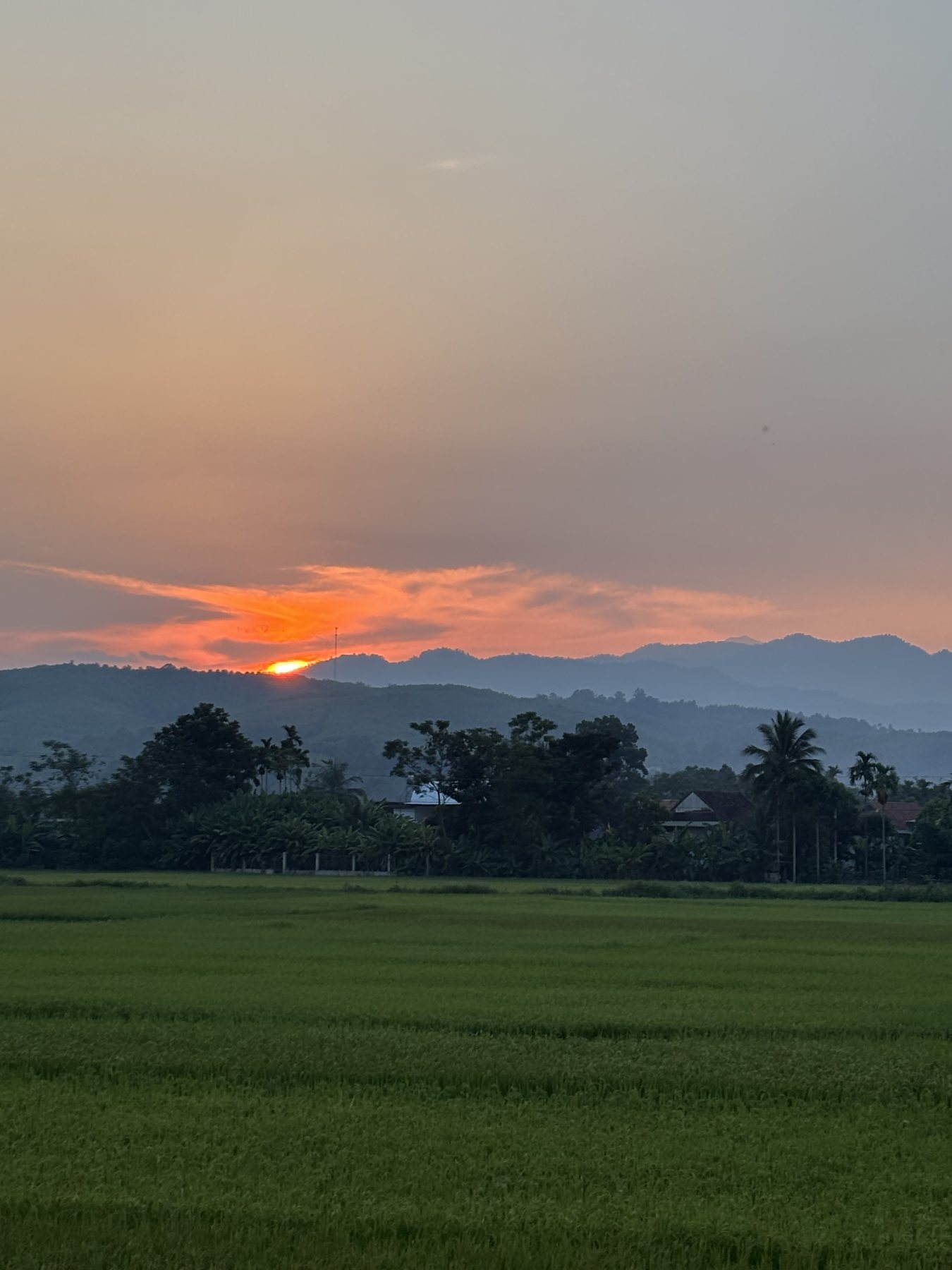
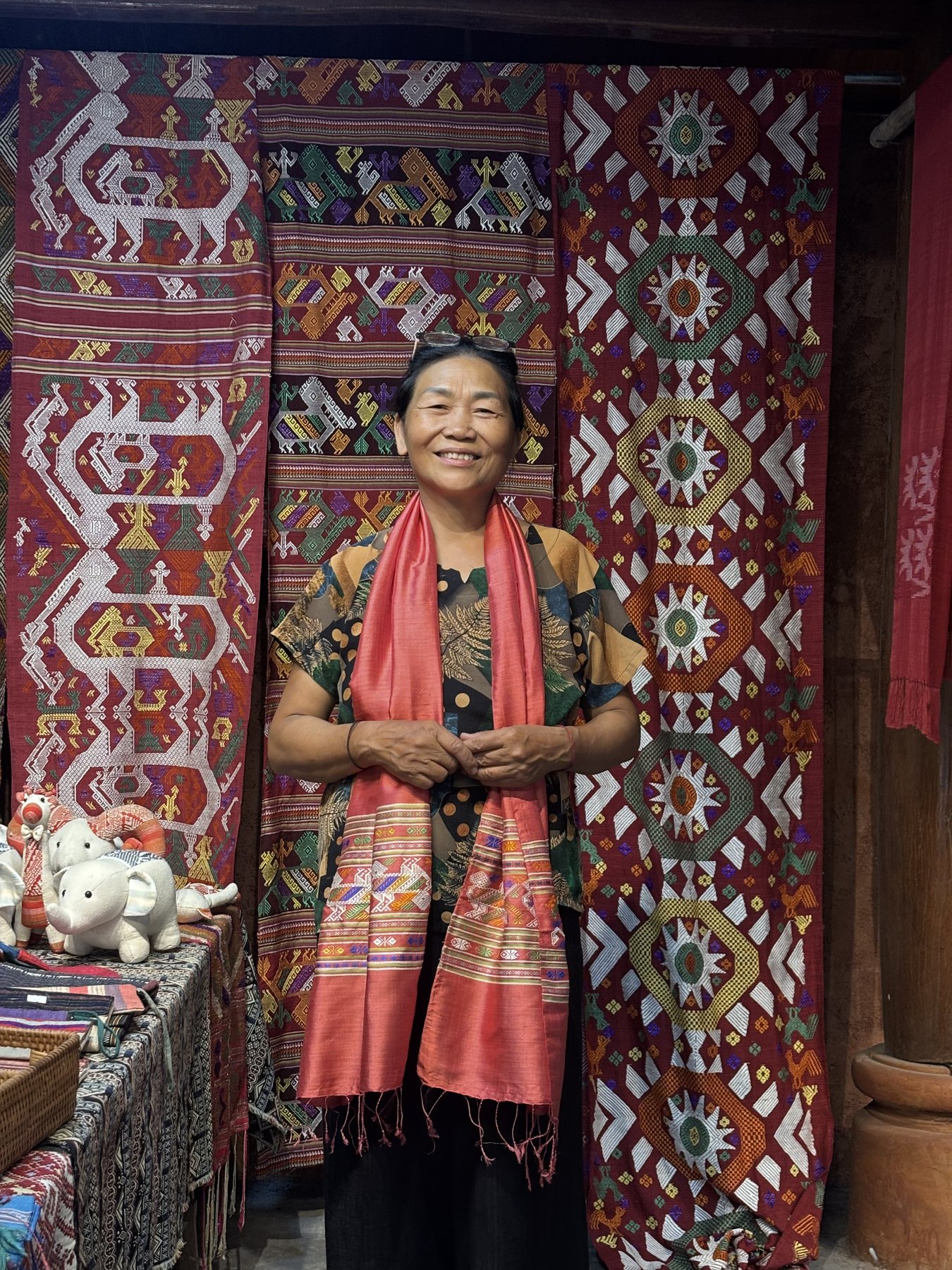
Hoa Tiến sits in Quỳ Châu District, in western Nghệ An province, surrounded by rice fields and low mountains, not high enough to turn cold. Elephants once lived in this region, and they still appear in the weavers' patterns today, alongside stars, suns, and other animals carried in the women's memory rather than on paper. This is one of the most established Thái ethnic minority brocade-weaving villages in the region, a craft kept for more than a century, and in June 2025 Thái brocade weaving in Nghệ An was recognized as National Intangible Cultural Heritage.
In the village, Thái is the first language. Vietnamese comes second, which is part of why it is so easy to understand: the women learned it the same deliberate way a visitor might. Between themselves, and with their children, they speak Thái, a language that sounds nothing like Vietnamese.
Cat-Vi arrived toward the end of the rainy season, when the paths were still mud and the mulberry leaves had to be harvested wet, then dried before feeding. It was the wrong season for anything to be simple, and the right season to see how much work this craft actually asks for.
This collection exists because of a friendship that goes back to Cat-Vi's childhood, at Plum Village, the Buddhist monastery in the south of France founded by the Vietnamese monk Thích Nhất Hạnh, where she grew up. A childhood friend from Vietnam, now living in Switzerland, put her in touch with her cousin, also Vietnamese and also working in textiles, who was preparing a three-month residency in Vietnam to study weaving. Cat-Vi told her about MamaQuilla and asked if she had any contacts to recommend. She did.
Cat-Vi reached out to those contacts once she was already in Vietnam, in Huế, where she was spending a month and a half with her 95-year-old grandmother at the orphanage her grandmother runs. That was the real reason for the trip: to be with her grandmother, to work on her Vietnamese, to sit inside her own roots. A collection was not the plan.
Cat-Vi had discovered she was pregnant two days after booking the flights, and spent these two months in Vietnam in her first and early second trimester, through morning sickness, exhaustion, and nearly 40-degree heat. It meant doing less than she had originally hoped, and it also meant this collection carries her own body's season, not only the village's.
When she had more steadiness, she wrote to the weavers and asked if she might come and learn from them. They said yes.
 Silkworms · Mulberry
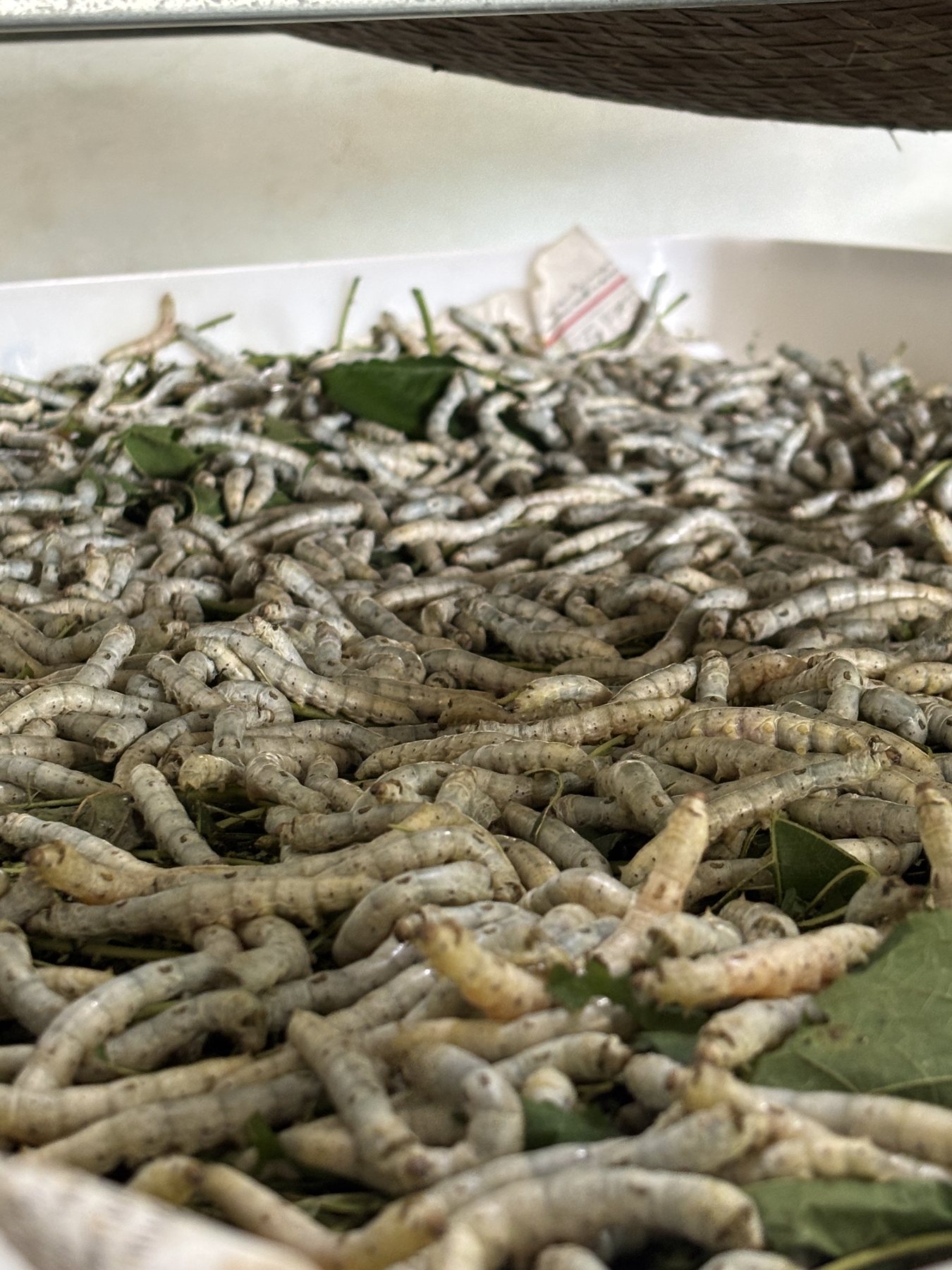
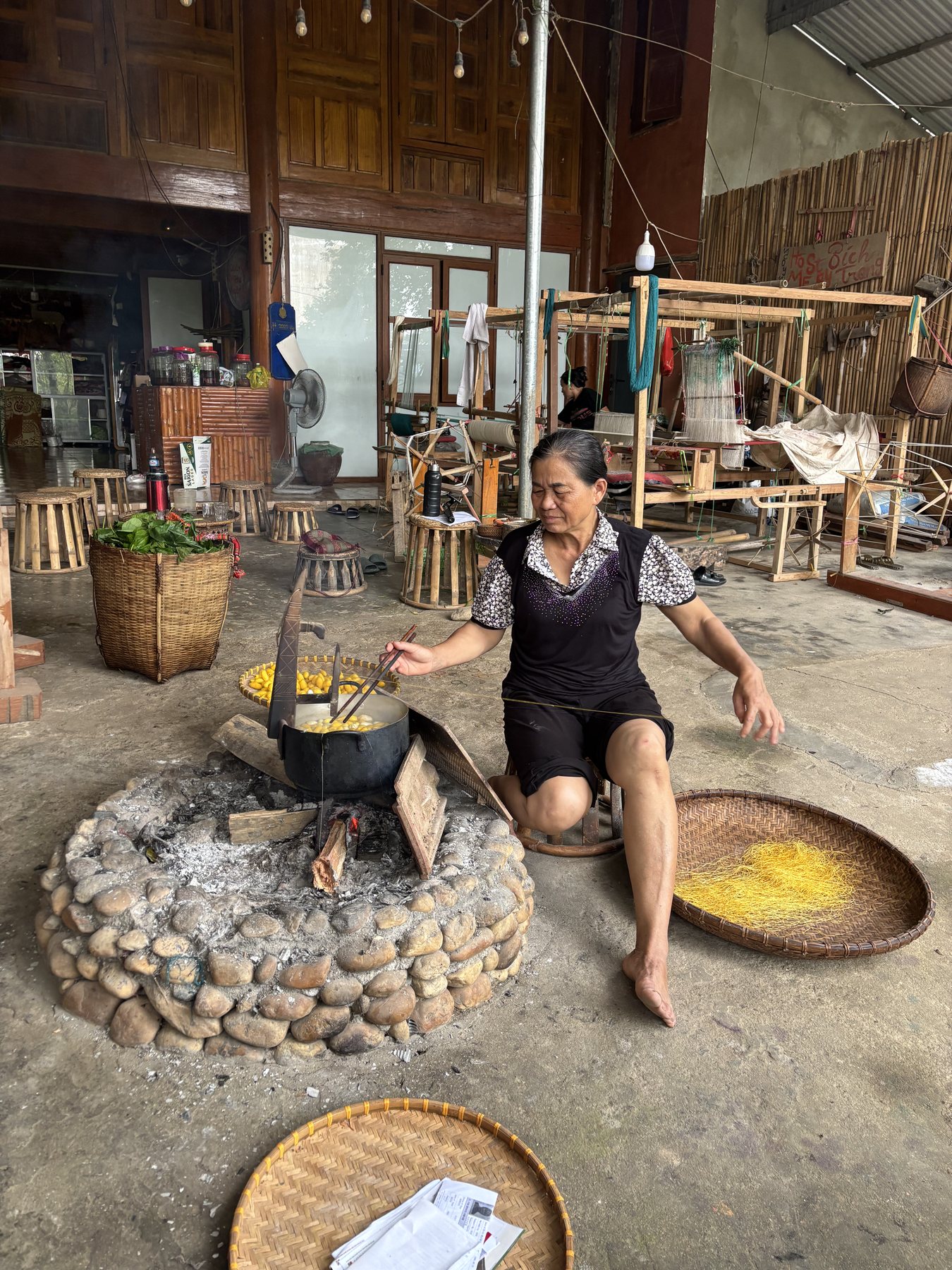
The village's work turns around silk. Several times a year, roughly five cycles of about twenty days each, the women raise silkworms, and Cat-Vi arrived in the middle of one. She watched the days that this asks for: mulberry leaves harvested from the forest, often through mud at the end of the rainy season, dried, and fed to the worms four or five times a day, the first feeding around 5:30 in the morning and the last around 8 at night. It is constant work, timed to the worms rather than to the person.
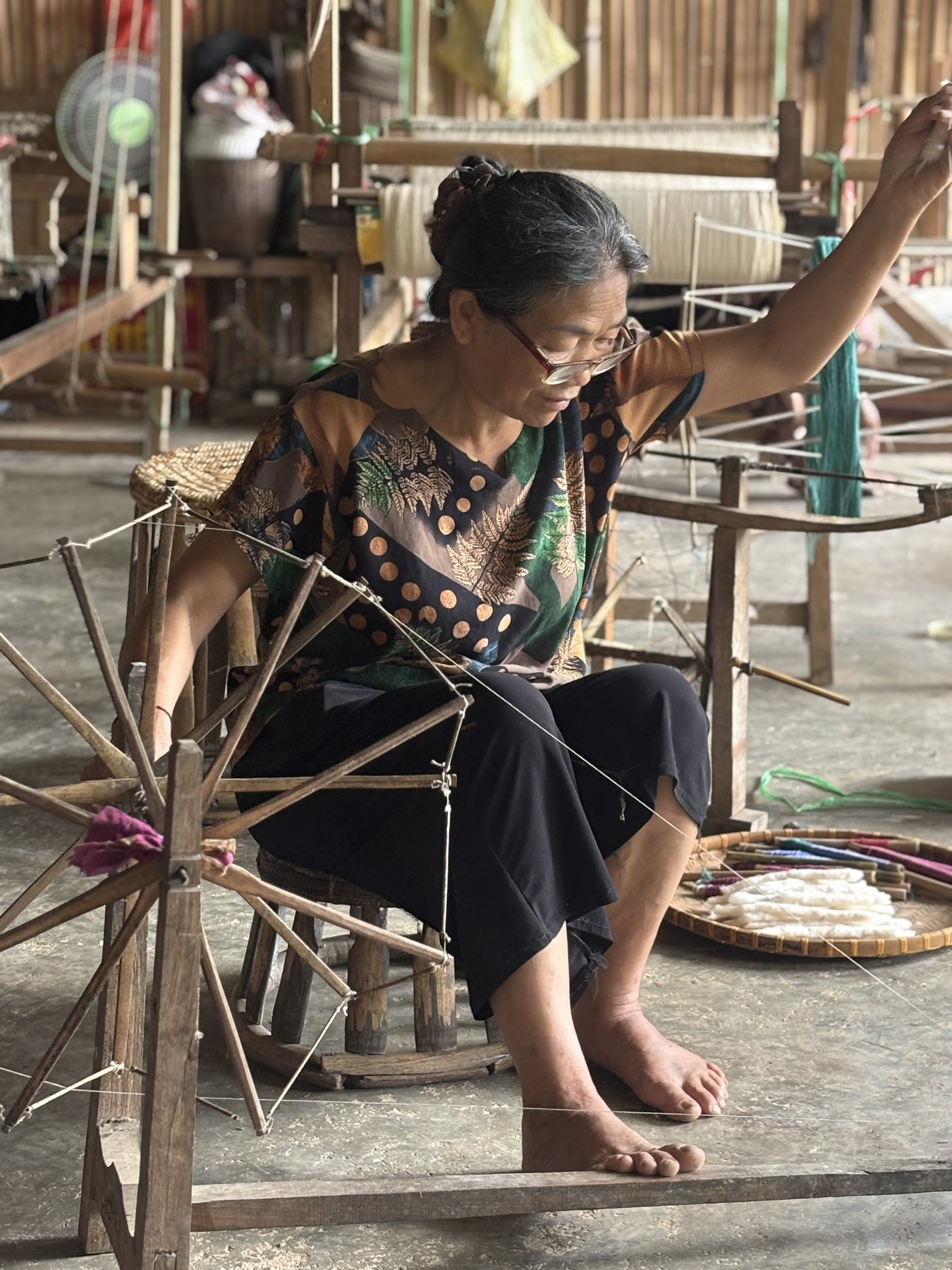
Once spun, the silk, along with hand-grown cotton that is deseeded, carded, and spun by hand, is woven on pedal looms and dyed with plants. Plant-dyed silk has a particular character: the color comes out vivid, almost too vivid to look natural, with a soft sheen from the processing and washing. It is a little less soft than shop silk, but not by much, and the color is entirely its own.
The patterns, stars, suns, and animals including elephants, a memory of when elephants lived in this land, live in the weavers' memory, not on paper.
Cat-Vi's time in the village overlapped with one of Vietnam's biggest holidays, Independence Day, celebrated in early September with several days of festivities. Two nights running, Cô Bích and the other women of the cooperative took the stage in clothes they had woven themselves, dancing and singing while holding textiles in their hands, alongside other groups of women from the village doing the same. It was a full cultural show built around the weaving itself. Watching it, Cat-Vi understood something she had felt but not yet seen so plainly: that silk and weaving are not only this village's economy, but its culture and its pride, worn and carried and performed, not just made and sold.
Cô Bích is the mother, grandmother, and master weaver at the center of the village's work. She is also, in effect, the head of a small cooperative: she employs women of the village, paying them to help with the silkworms or to weave, whether at her looms or at their own homes, where they weave and then bring their finished cloth to her. She rarely rests. Even through the midday hours when much of Vietnam pauses to nap, she is usually still working; there is simply too much to hold.
Beside Cô Bích is Cô Hoa, her sister-in-law. Cô Hoa was married to her husband's brother, and both women were widowed. They do everything together now, and anyone meeting them would take them for sisters.
Cô Hoa spins, dyes, and weaves, and holds as much of the knowledge as anyone in the village. She is spontaneous and quick to laugh, and the work seems lighter around her. Her name means flower.
Cat-Vi lived with Cô Bích's daughter Chị Trang, a primary school teacher who runs the family's homestay, and her two children. The women gave Cat-Vi real independence: they would show her something, a technique, a step, then return to their own work, trusting her to continue and to call on them if she got stuck. It is how she prefers to learn, and it is how she came to feel, in a short time, genuinely held by this family.
Cô Bích's other daughter, Chị Tinh, runs the Hoa Tiến shop in Hanoi, where Cat-Vi spent a few days after leaving the village. Chị Tinh is more business-minded and organized, university-educated, and it was with her, in the city, that a second stretch of design work happened, closer to finished seamstresses and a wider stock of textiles.
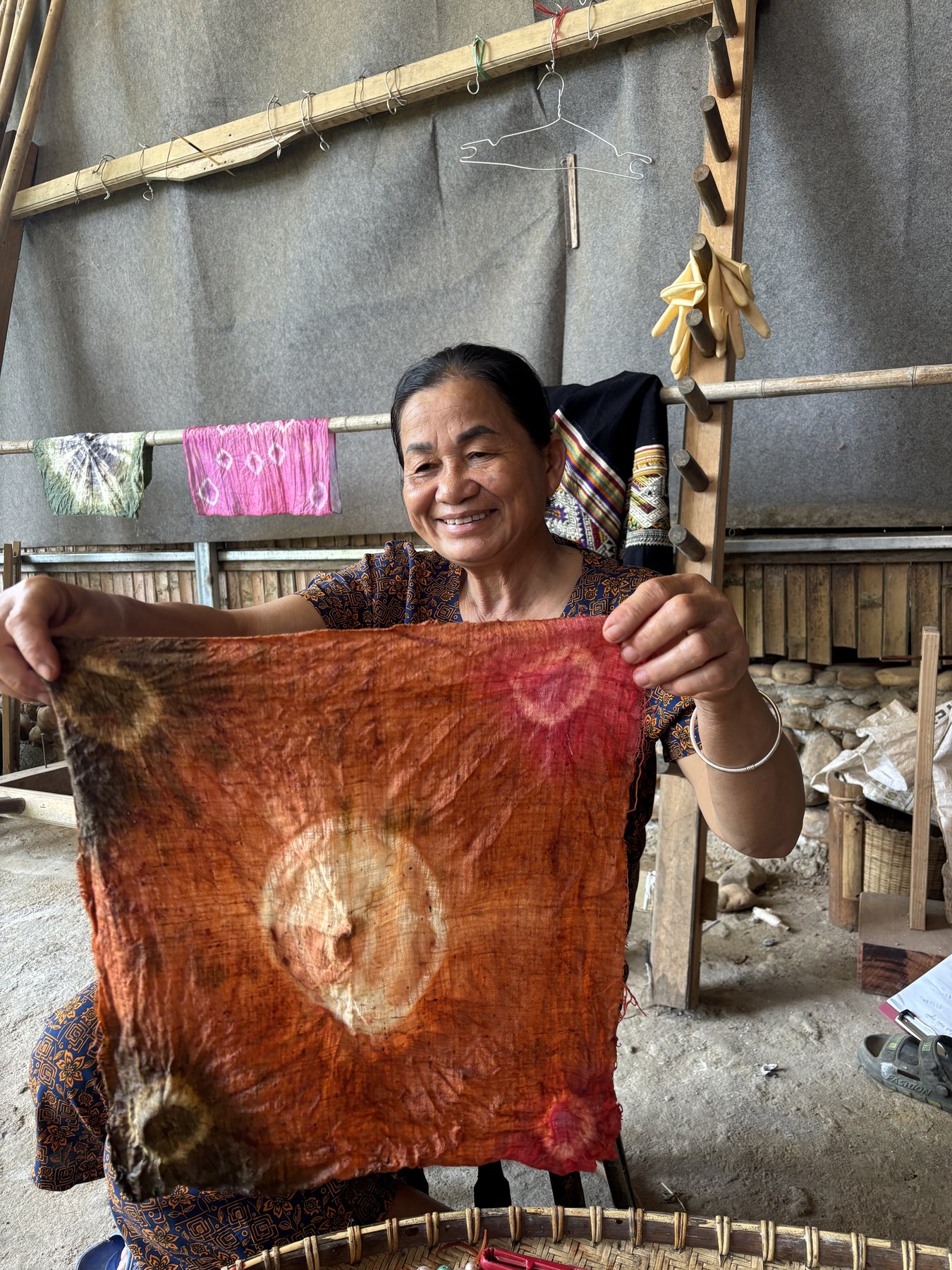
Every MamaQuilla collection so far has come from a single community. Chôm mâng does not. Alongside the pieces made and sourced in the village with Cô Bích's family, this collection carries hand-dyed indigo textiles from the Hmong, another ethnic minority Cô Bích works closely with and whose work Cat-Vi deeply admires, and antique textiles from the Dao people, discovered while going through Chị Tinh's stock in Hanoi. Cat-Vi's very first Vietnamese textile, long before MamaQuilla existed, was Dao.
Some pieces were designed and sewn from scratch: cotton pants dyed with plants, finished with Hmong indigo detailing; two traditional Thái coats, already hand-spun and indigo-dyed, to which Cat-Vi added Thái textile trim on the back and sleeves. Others were chosen as they were: a handful of silk scarves, entirely homegrown and plant-dyed, honoring the village's own silk tradition without alteration. In Hanoi, working from Chị Tinh's stock, more pieces came together, pants and shirts in cotton and plant dye, some incorporating Hmong textiles. Antique Dao headscarves, not typically worn as headwear by a MamaQuilla customer, were upcycled into tops. A small number of antique Dao textiles are offered as they are, to be worn or kept as they have always been.
This is, in Cat-Vi's own words, a letting go: of the idea that supporting a community means working exclusively within it. She did not witness every textile in this collection being made, but choosing them, honoring where they came from, and bringing them forward is still a way of supporting the preservation of these traditions. It is also, she says, the collection that represents her work the most: a meeting place of new and antique, of one community and several, imperfect in scale but true to how she actually works. It is why, when Cô Bích offered a name, the word she chose was meeting.
Chôm mâng is a small collection, built in a couple of weeks in the village and a few more days in Hanoi, not a full production season. It holds around thirty-five pieces across coats, pants, tops, scarves, jackets, and kimonos: new pieces designed and sewn from village and Hanoi textiles, finished pieces bought as they were, antique Dao and Thái textiles offered whole, and upcycled pieces remade from antique cloth. Some carry plant-dyed cotton and hand-spun silk from Hoa Tiến itself; others carry Hmong indigo work or Dao antique weaving. Each piece is one of a kind, or made in very small numbers.
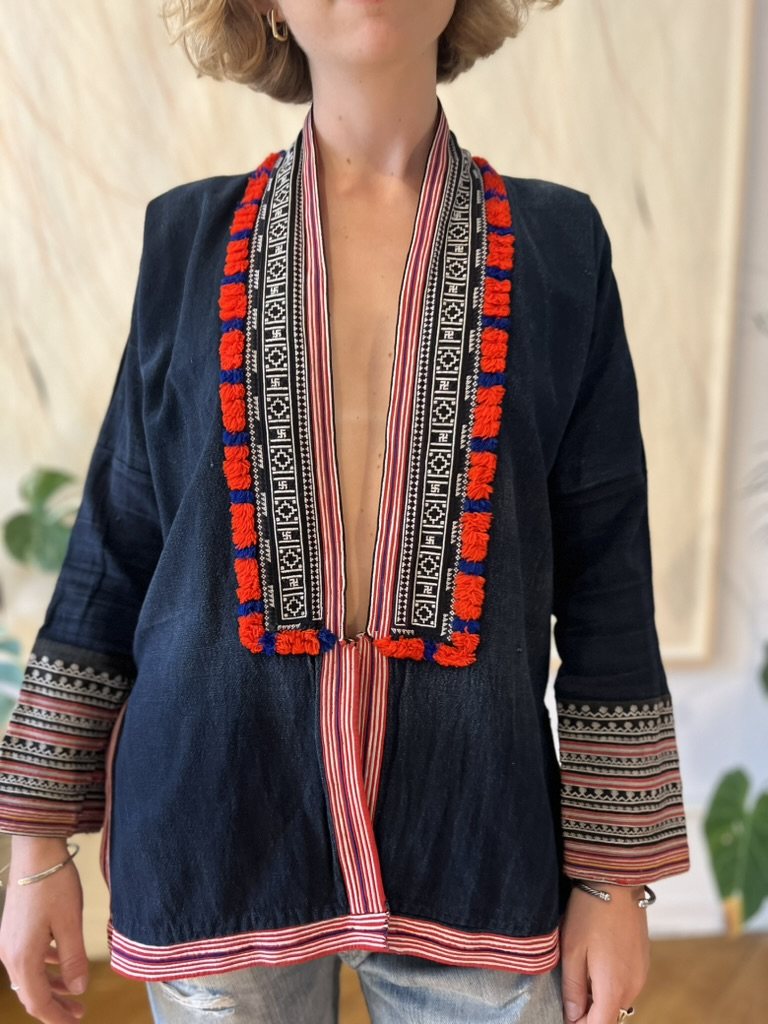
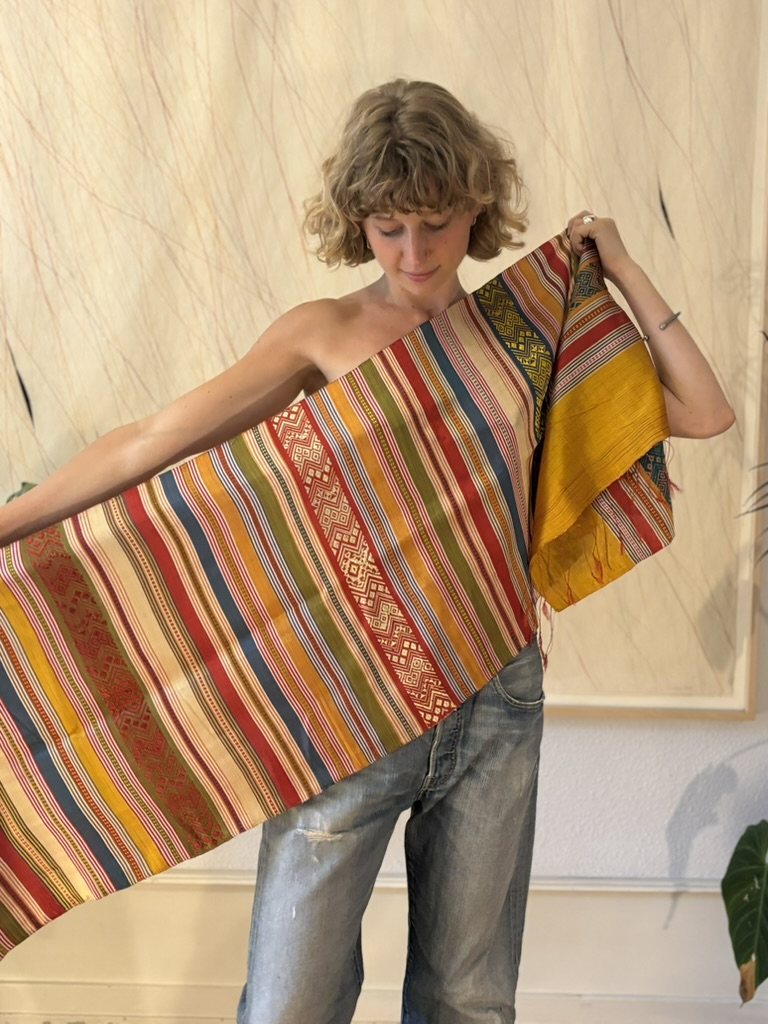
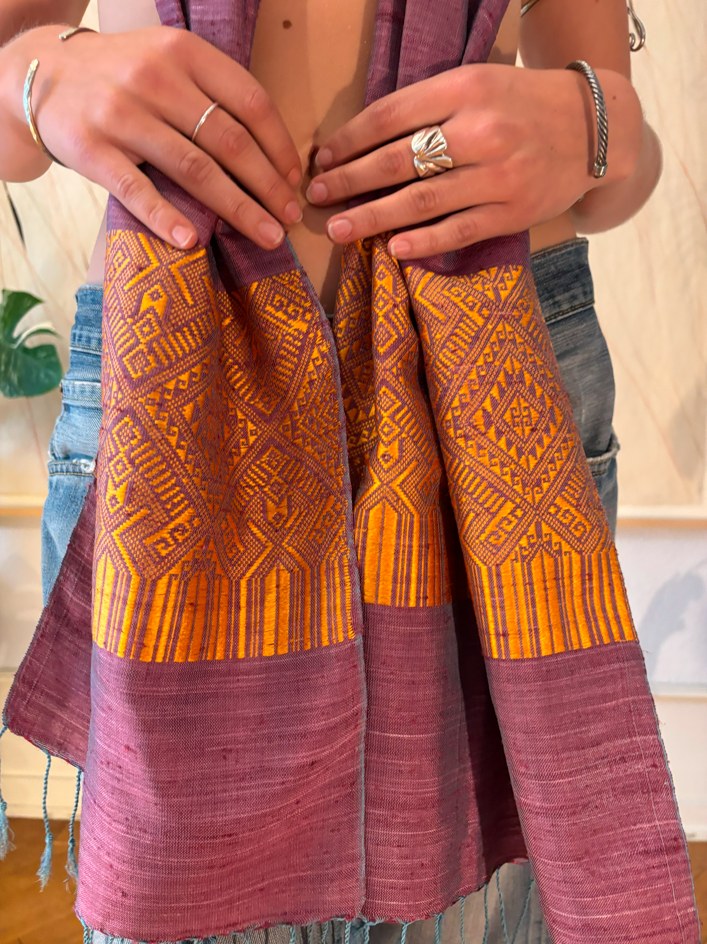
When you choose a piece from Chôm mâng, your support reaches Cô Bích and her family directly, and it helps carry forward the silk and weaving traditions of the Thái community of Nghệ An, alongside the Hmong and Dao textiles woven into this collection. These pieces hold more than one place and more than one pair of hands. To wear one is to help keep a wider thread of Vietnamese textile heritage, across several communities, from being lost.
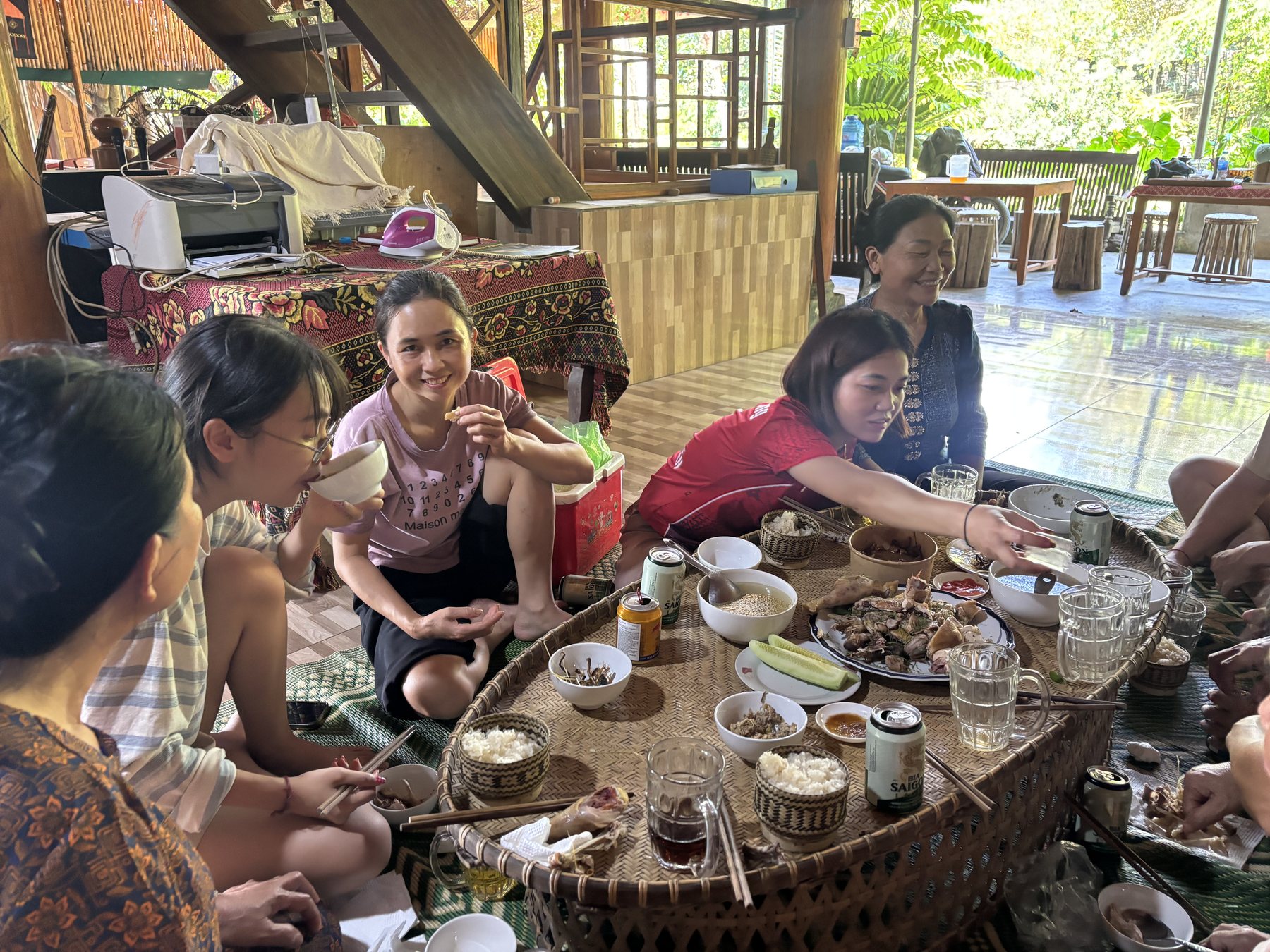
Every MamaQuilla collection takes its name from the community that made it, in that community's own language.
This one came from Cô Bích. In Thái, chôm mâng means a joyful meeting, an encounter that brings many good things to each other. She offered it knowing what this collection is: not one community but several, met along one road.
Hoa Tiến is the village. Chôm mâng is what happened there.
Textiles as vessels of story, memory, and relationship.
MamaQuilla grows slowly. Leave your email to receive word of new pieces, upcoming events, and the stories behind the collections.
We write rarely, and with care.